Why Senior Cats Stop Grooming Themselves (And What That Signals)
By Leonardo Fonseca · 2026-09-21
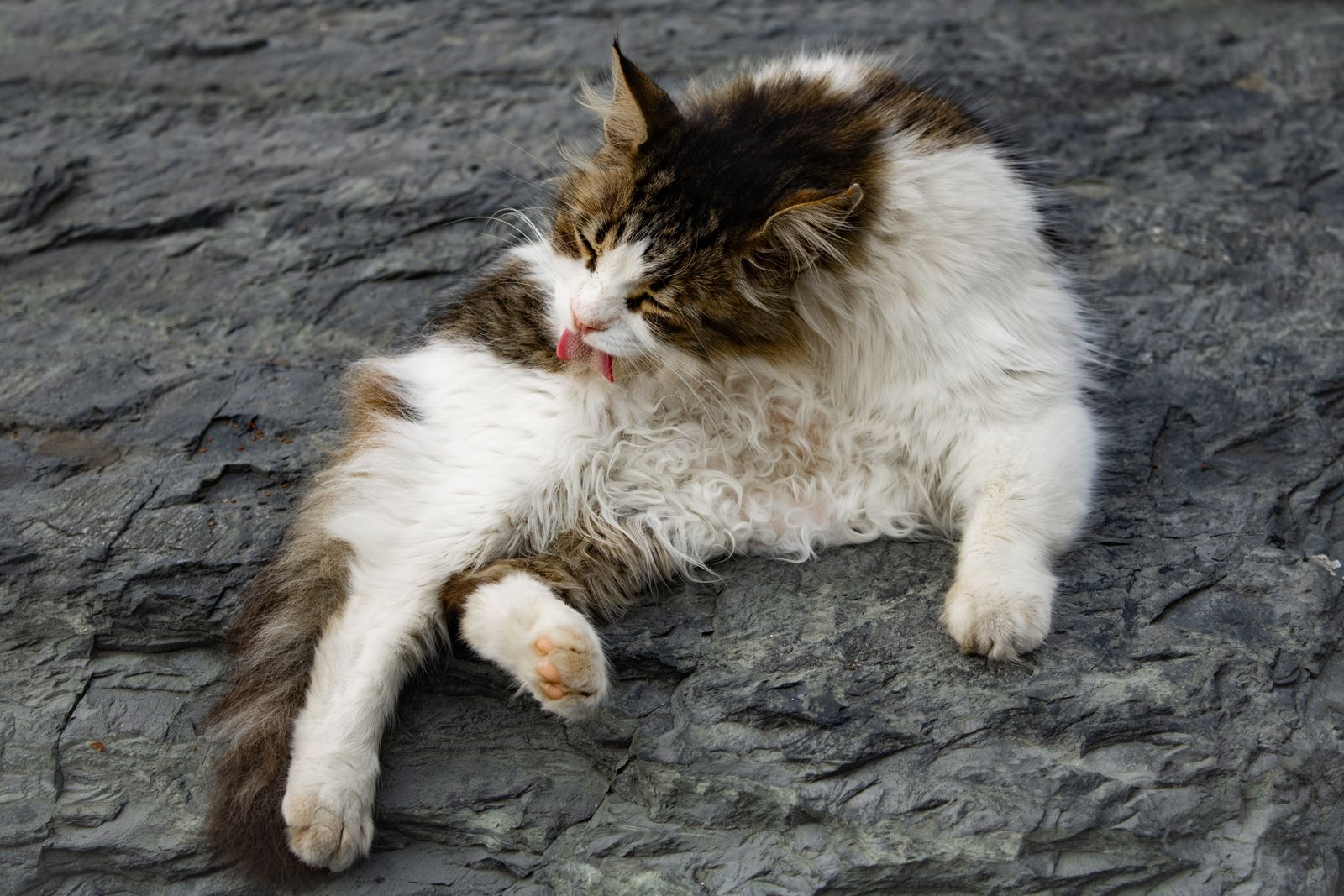
A cat's coat is one of the more underrated diagnostic clues in senior feline care. Cats spend a significant portion of their waking hours grooming, and when that behavior drops off (coat looking greasy, dull, or matted, especially over the hips and lower back where a cat can't easily reach on its own), it's rarely about vanity or preference. It's usually a signal pointing to something else.
The two most common underlying causes
Coat and grooming are my actual trade: I see this pattern constantly across customers' cats, and two possibilities come up more than any others, pointing in different directions:
- Osteoarthritis limiting reach and flexibility. Cats are extremely flexible groomers, reaching the hips, lower back, and tail base by bending in ways that require real spinal and hip mobility. Arthritis in those areas (which is common and frequently underdiagnosed in cats, since cats mask pain even more effectively than dogs) makes those positions uncomfortable or impossible, and grooming in those specific spots drops off first. A matted patch specifically over the lower back or hips, with the rest of the coat relatively normal, points toward this rather than a general illness.
- Underlying systemic illness reducing overall energy and motivation. Conditions like hyperthyroidism, kidney disease, or dental pain reduce a cat's general activity and self-care motivation across the board, not just in hard-to-reach spots. A coat that's uniformly declined, not just localized to the hips, points more toward this category, and usually comes with other subtle signs like weight change or altered appetite.
This distinction is useful practically: a localized pattern versus a whole-body pattern gives a real clue about what to investigate first, rather than treating "grooming less" as one generic problem.
Why this sign gets caught late
Coat changes are gradual, and owners who see their cat daily tend to adjust to the decline without registering it as a change, the same reason gradual weight loss is often missed. It's common for owners to only notice when a visitor comments on the cat's coat, or when a mat becomes severe enough to require intervention. Comparing photos from 6 months apart is a more reliable way to catch this than relying on day-to-day impression.
What to actually do about it
Don't jump straight to more frequent bathing or a grooming product as the fix; that treats the symptom, not the cause. The useful first step is a vet visit that includes a joint assessment (checking hip and spine mobility specifically) alongside standard senior bloodwork, since the coat change is a symptom pointing toward one of the two categories above, not a standalone cosmetic issue. Brushing gently in the areas the cat can no longer reach is a reasonable supportive measure while the underlying cause is identified, not a replacement for finding out why it's happening.
What I tell customers
Treat a declining coat in a senior cat the same way you'd treat a new limp — as a signal worth investigating, not a cosmetic issue to manage around. In my experience grooming and talking with customers about their cats' coats every week, it's one of the more reliable early indicators owners can actually observe at home, well before more obvious symptoms show up.