Cognitive Decline in Senior Dogs: What's Normal Aging vs. What Isn't
By Leonardo Fonseca · 2026-09-20
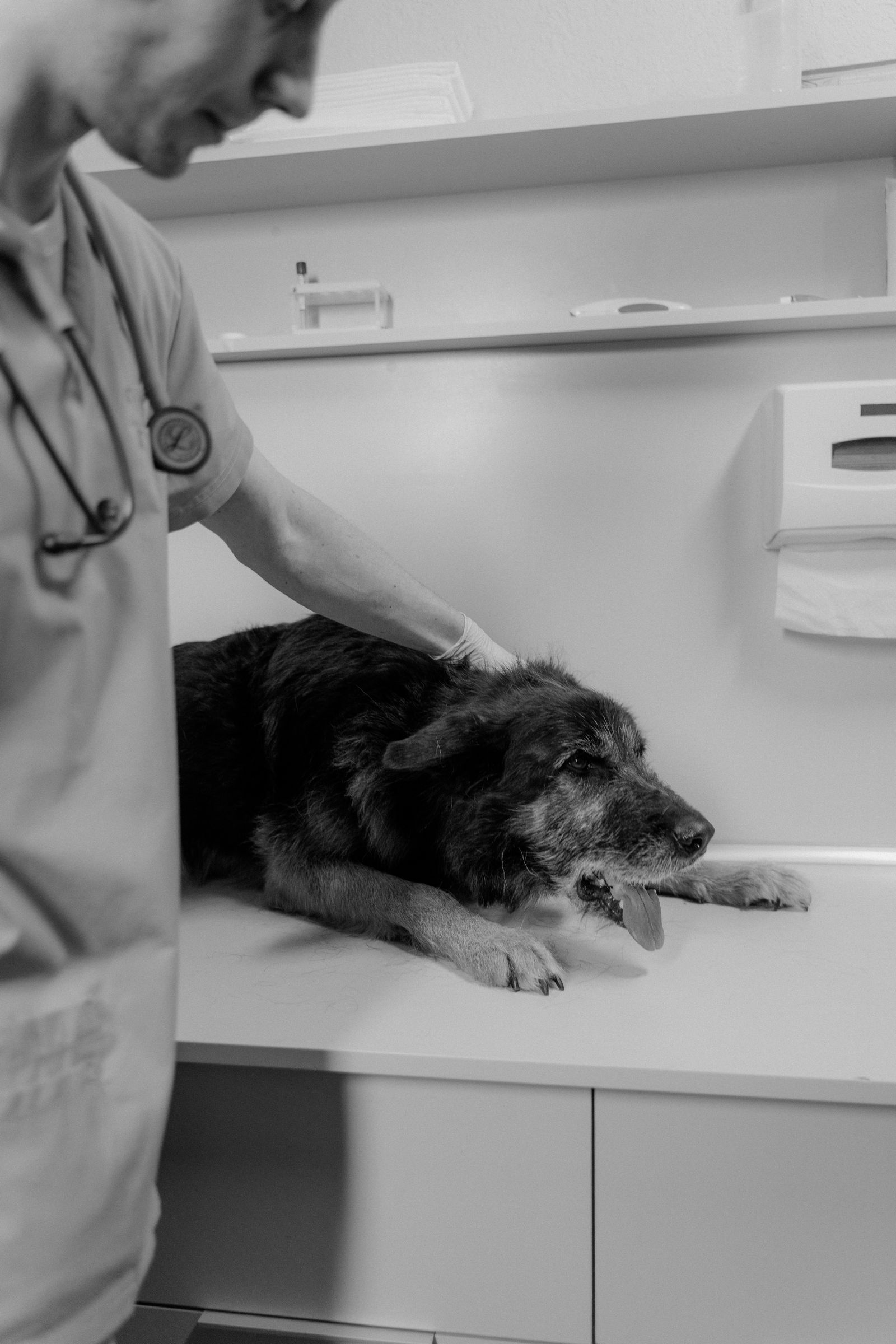
Customers often describe the same handful of behavior changes when talking about an aging dog: staring at walls, getting "stuck" in corners, disrupted sleep, occasional accidents in the house. The question I get most is whether this is just normal slowing down or something that needs active management. The honest answer is that it depends on pattern and progression, not any single behavior in isolation, which is exactly why this is a conversation for a vet, not a guess made at home.
The framework that actually helps: DISHA
Veterinary behavior specialists use a framework worth knowing, even in plain terms, because it separates ordinary aging from canine cognitive dysfunction (CCD) more reliably than any single symptom:
- Disorientation: getting lost in familiar spaces, staring at walls, going to the wrong side of a door.
- Interactions: reduced interest in greeting family, changed relationship with other pets.
- Sleep-wake cycle: pacing or vocalizing at night, sleeping more during the day.
- House soiling: accidents in a previously house-trained dog, without a clear medical cause.
- Activity: repetitive behaviors, reduced or sometimes increased purposeless activity.
One or two mild signs, especially sleep changes alone, can be ordinary aging. What shifts a diagnosis toward CCD is multiple categories showing up together, and progression over a few months rather than a stable, mild pattern.
The mistake I see most: assuming it's "just old age" without ruling out medical causes
This is the part that actually changes outcomes. Disorientation and house soiling in an older dog can also be caused by things that are treatable and unrelated to cognitive decline: vision loss, hearing loss, urinary tract infections, pain that limits mobility to the point the dog can't get outside in time, or thyroid and other metabolic issues. I've heard from more than one customer whose dog was labeled as having "doggy dementia" by the family, when the vet later found the actual cause was a treatable UTI or arthritis pain limiting mobility. Ruling those out first isn't optional; it changes the entire treatment plan.
What actually helps once CCD is confirmed
There's no reversal, but there's real, evidence-supported slowing of progression through a combination of approaches, not any single fix:
- Environmental enrichment: continued mental stimulation (short training sessions, puzzle feeders, varied walk routes) has real support for slowing decline. A dog that stops being mentally challenged tends to decline faster.
- Diet formulated for cognitive support: diets with medium-chain triglycerides and antioxidants have measurable evidence behind them for CCD specifically, more than general "senior" formulas.
- Medication, where appropriate: there are prescription options that can improve symptoms in a meaningful share of dogs, worth discussing directly with a vet rather than assuming nothing can be done.
What I tell customers
Don't self-diagnose CCD from a checklist alone. Get an exam that rules out the treatable medical causes first, and if CCD is confirmed, start the combination approach early; it works better before decline is advanced than after.